“A leap in the dark”
by MASU Kazuya, Director of G-QuAT
―AIST RESEARCHER MANGA―
Reporting & Story by AIST Manga by SHINOHARA Akira
This is not a science explainer. It’s a story of lives devoted to research.
Every invention is born beyond countless hours of trial and error — through the hands of researchers who keep moving forward, confronting one wall after another. Standing beside these researchers as staff at the same institute, we wanted to tell more than just the outcomes. We wanted to tell the human story of research — the doubts, the persistence, and the moments that never make it into papers.
These are voices we could hear only because we work alongside them — pure, unfiltered convictions about what it truly means to pursue research. Based on in-depth interviews, this nonfiction manga was crafted entirely in-house by AIST.
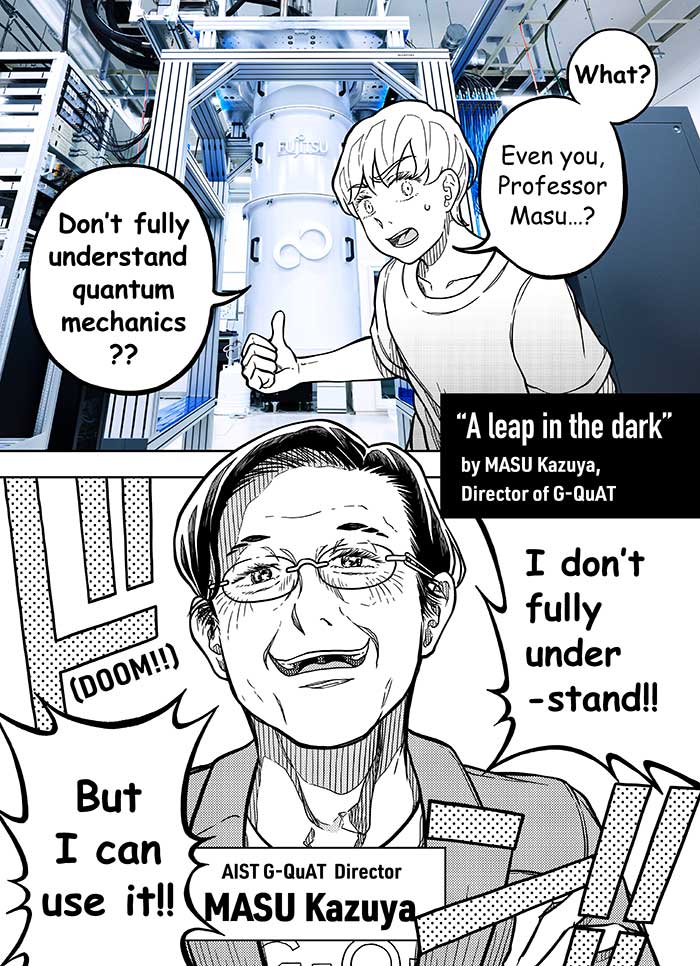
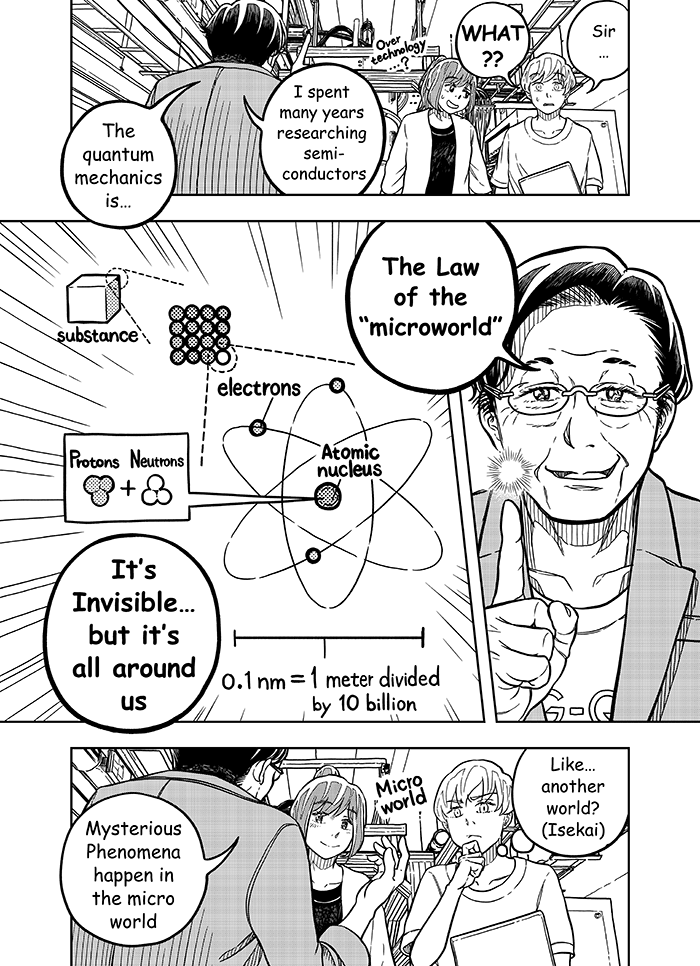
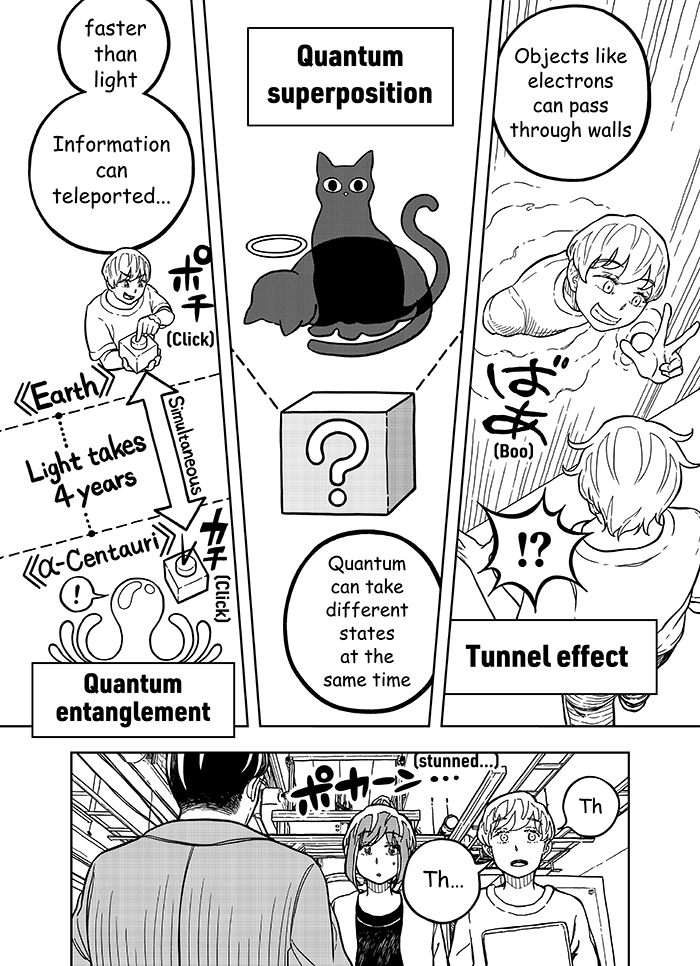
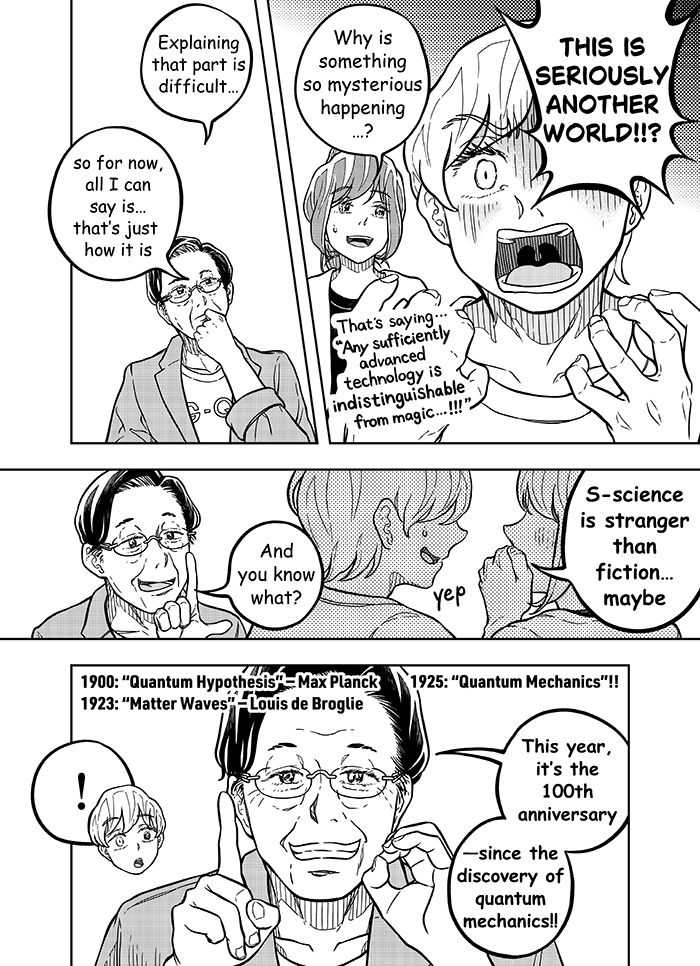
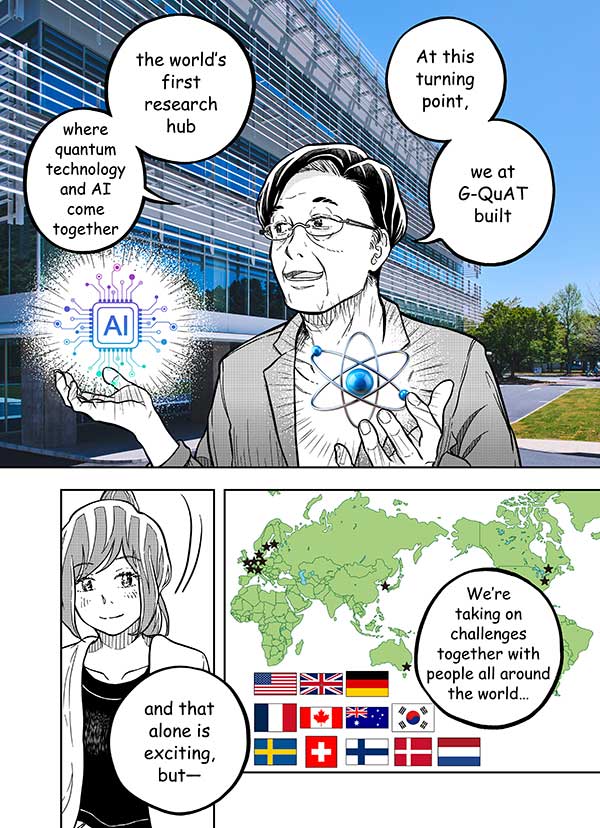
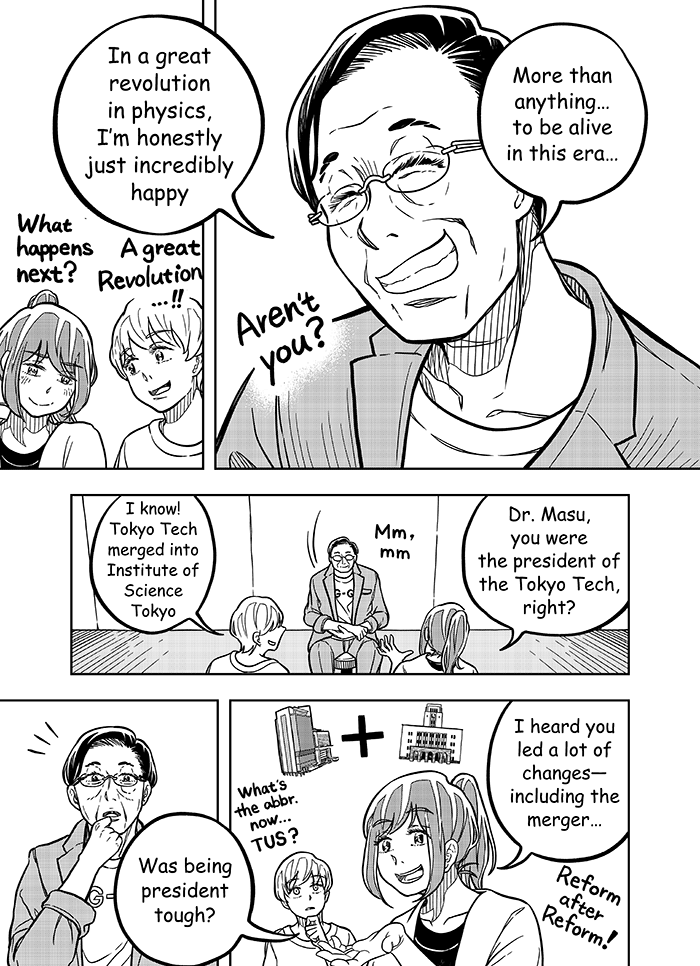
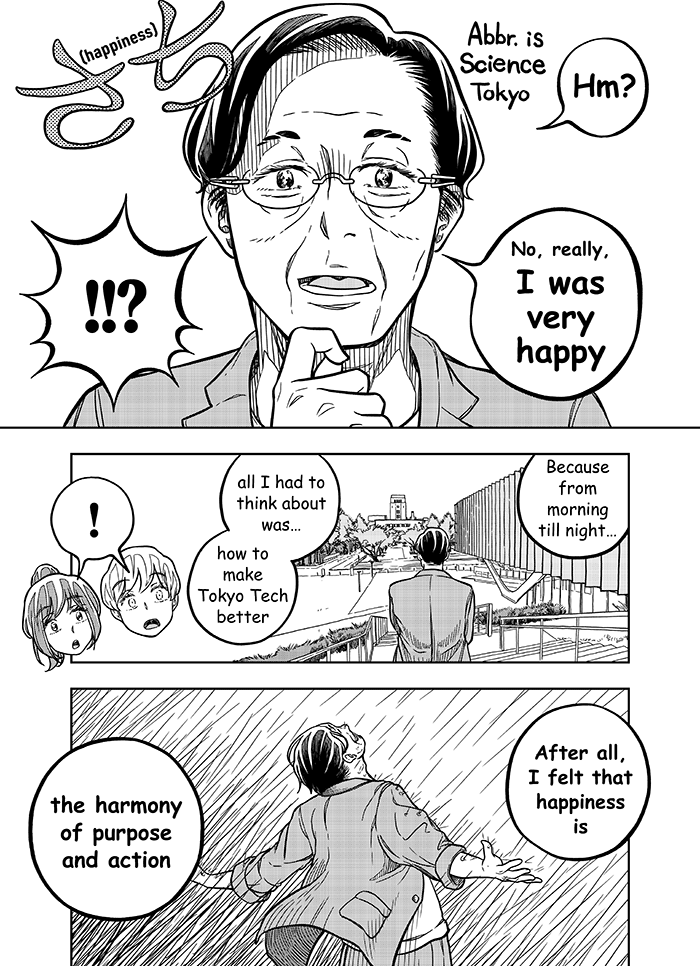
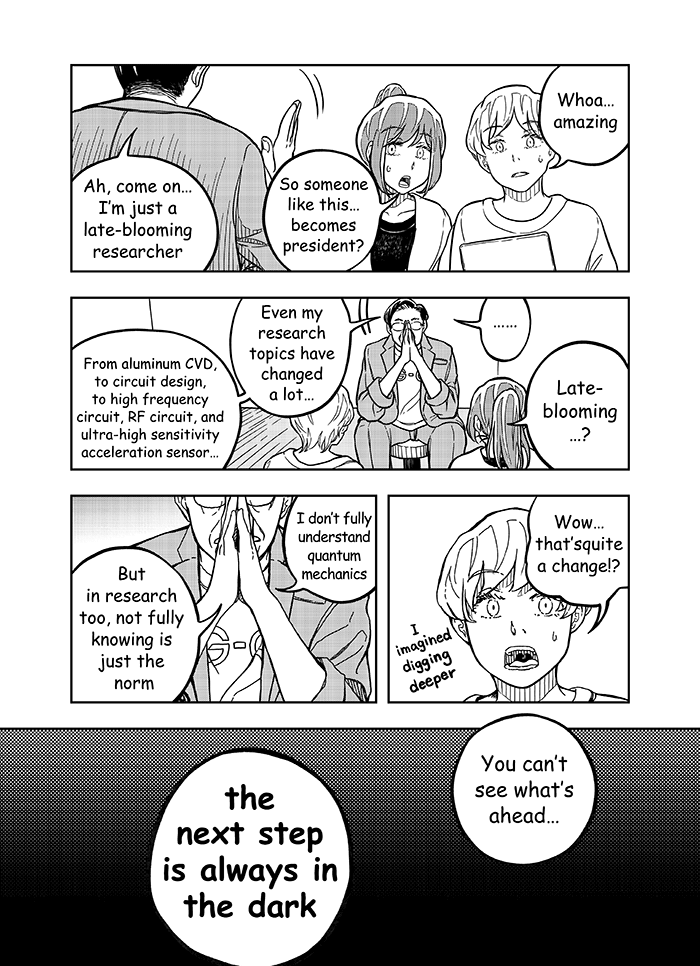
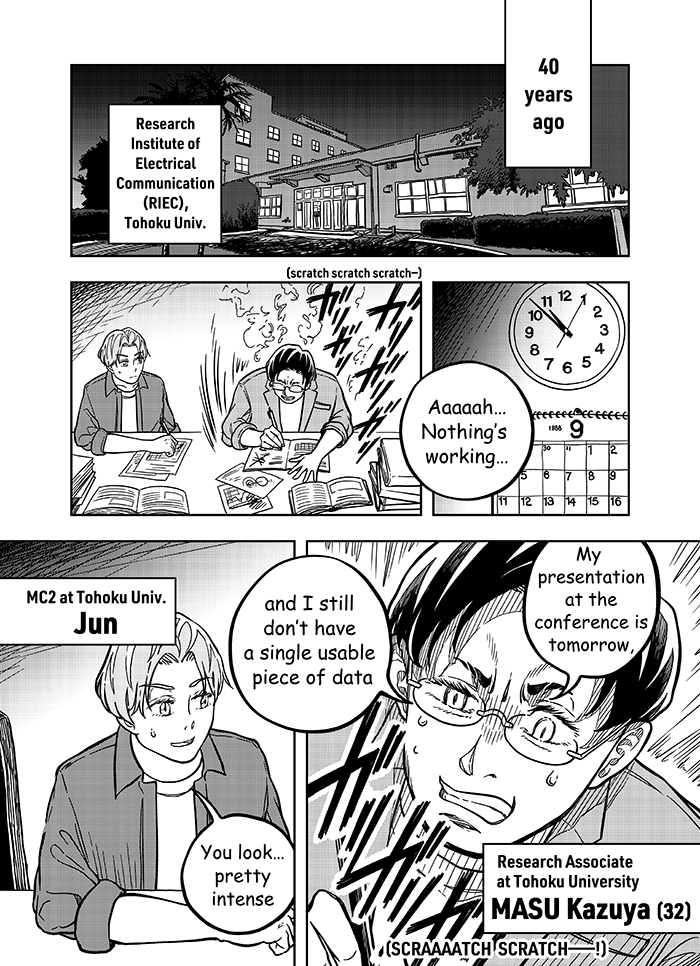
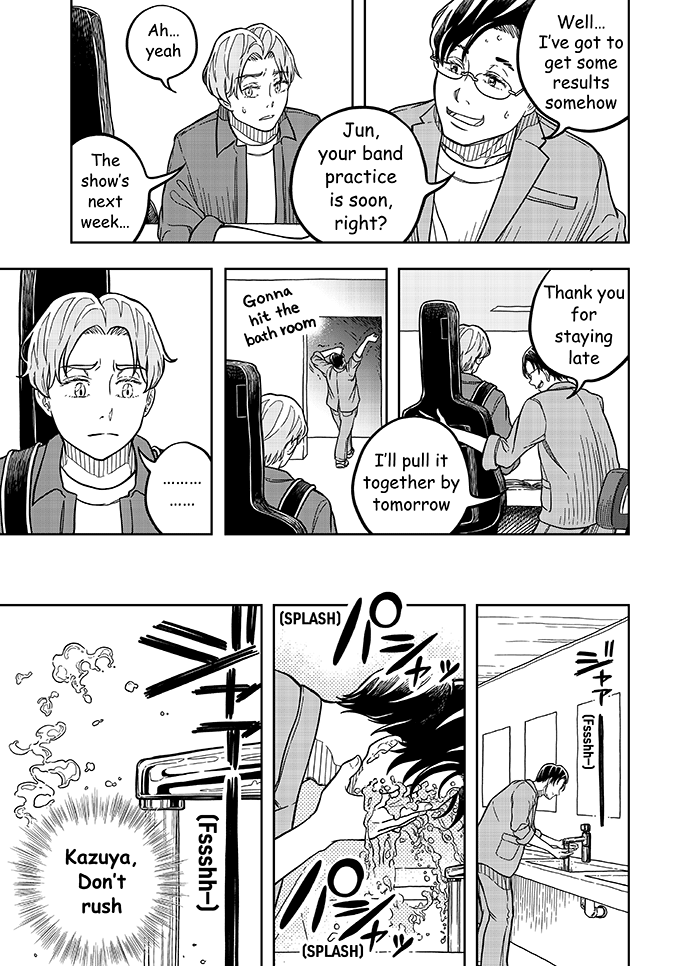
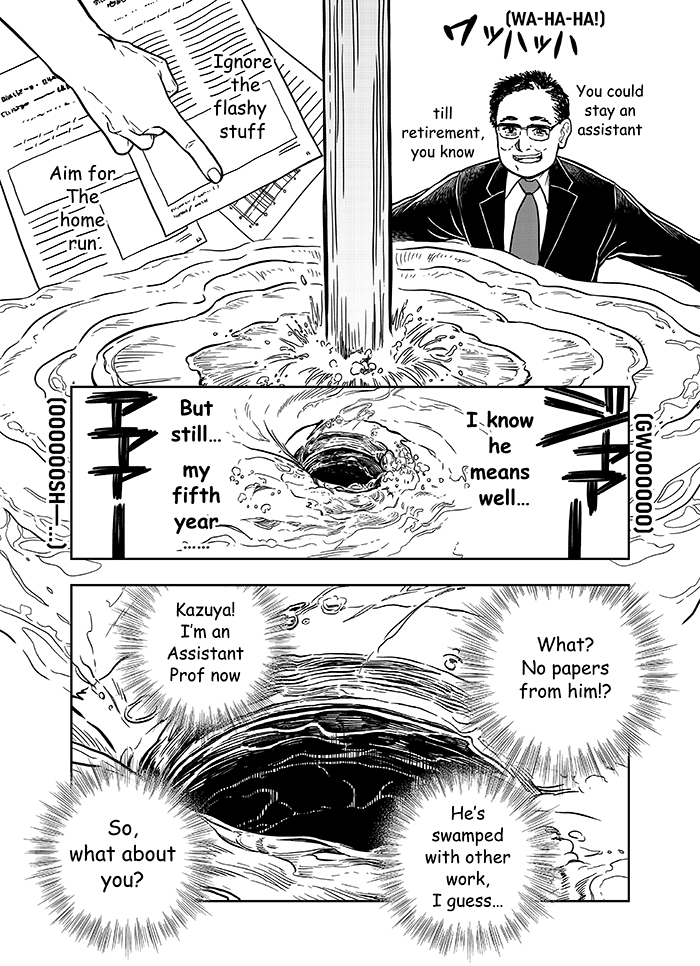

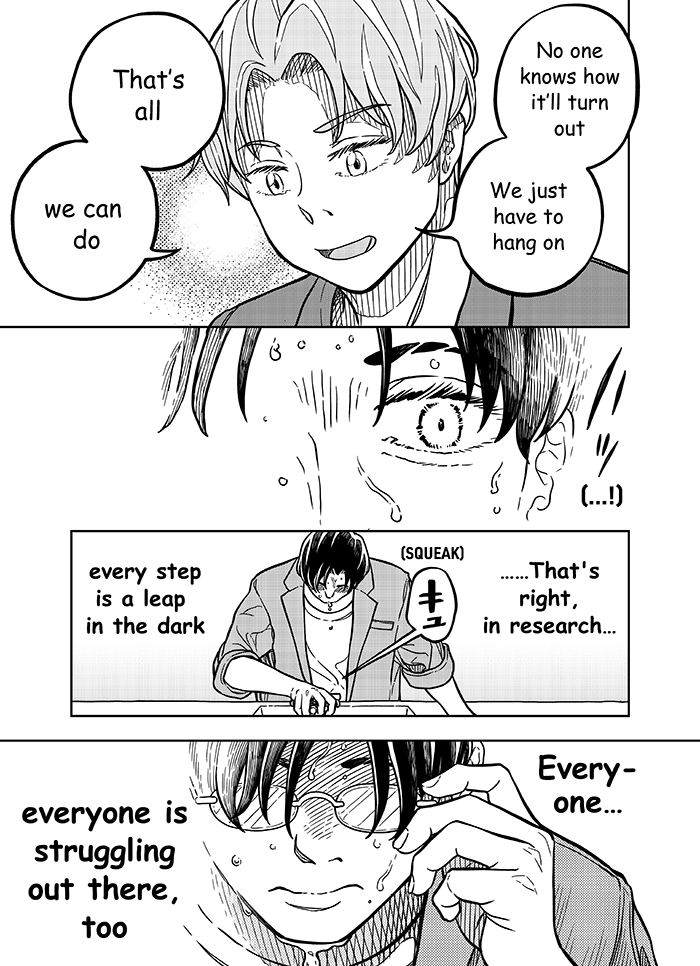

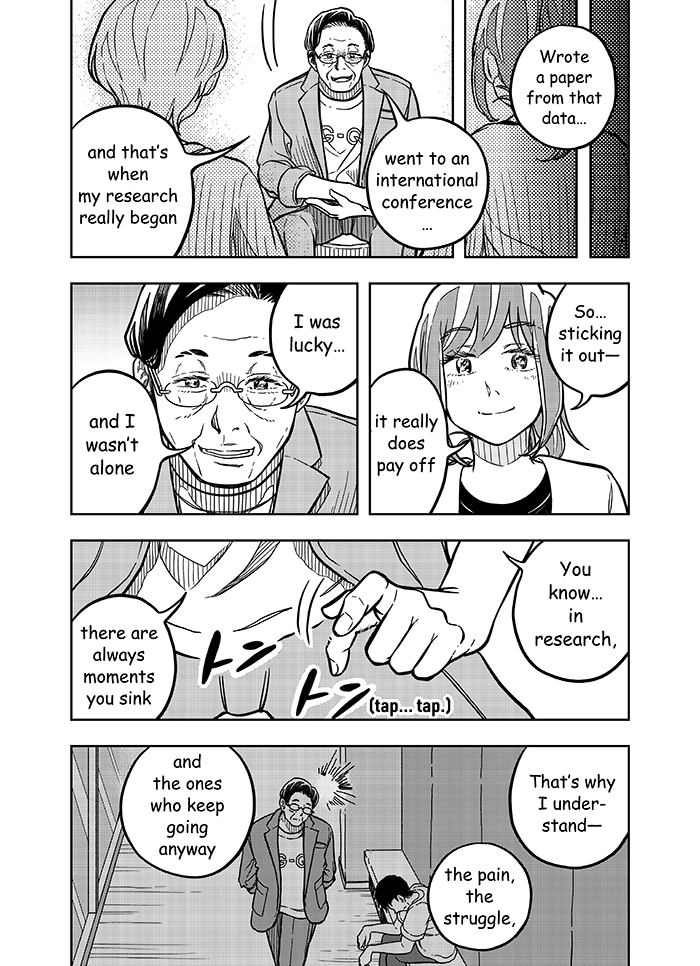
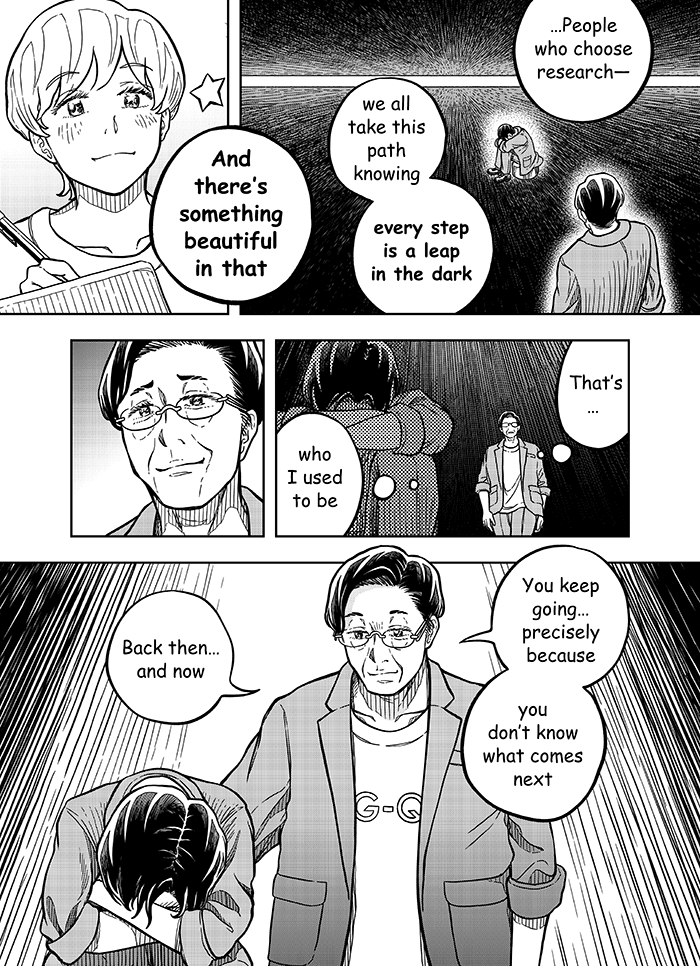
Behind-the-Scenes Stories: MASU Kazuya
Into the Quantum & AI Frontier — Join G-QuAT on a Journey of Adventure and Tenacity!
Embracing Change to Break Out of Linear Thinking
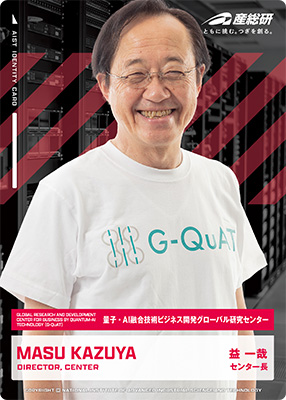
During his time as a student, Dr. Masu focused his research on semiconductor manufacturing processes and the evaluation of physical properties. After becoming a professor at the Tokyo Institute of Technology, he shifted his focus to the field of semiconductor “circuits.”
“When you move to a new research environment, it’s a chance to explore new topics. In fact, I think it’s only natural for your research to evolve along with it,” he says. He expanded his research field from aluminum CVD (chemical vapor deposition), which is essential for semiconductor wiring, to the design of the wiring itself and high-frequency circuit research. Although his fellow researchers remarked, “You did really change your research topic. That was a gamble,” Masu didn’t feel particularly anxious about diving into the new subject. His established network remained intact even in the new environment. Furthermore, during the development of an ultra-high-sensitivity accelerometer using gold plating, his entire approach to research began to shift.
“The research and development process is generally understood as a linear model that progresses through steps such as basic research → applied research → development → commercialization. However, while developing a product that measures human movement using an accelerometer, I came to realize that real development rarely proceeds in such a neat sequence. Once we can picture how a product will actually be used, we can start thinking from the user’s perspective — and that changes the kind of research you pursue.”
Integrated CMOS-MEMS technology combines semiconductor CMOS circuits and MEMS (micro-electro-mechanical systems: components such as tiny sensors and actuators integrated onto a single substrate) onto a single semiconductor chip. Using gold for the weight in the accelerometer improved sensitivity by a factor of 1000 compared to conventional designs and also enabled further miniaturization. Originally, the research focused solely on maximizing device performance. However, the focus shifted toward real-world use and he says that experience helped him make that perspective his own. This shift in thinking is particularly valuable in quantum research, a field currently drawing significant attention. He stresses the importance of consciously adopting the seemingly obvious practice of changing one's viewpoint.
“Current quantum research is undergoing a significant transformation. Furthermore, the pace of this change is extremely rapid. Traditionally, fundamental and applied research, social implementation, and innovation of their outcomes evolved linearly. Today, however, these elements have effectively merged into a single, fast-moving ecosystem across many research fields, with everything progressing simultaneously. In an era when equipment technology was less advanced and information flow was limited, the step-by-step approach starting with basic research may have been appropriate. But today, with generative AI powerfully supporting our very thinking and information being shared instantly worldwide, we must recognize that the landscape has shifted dramatically. Opportunities that were considered unattainable in the era of linear R&D models are now within reach.”
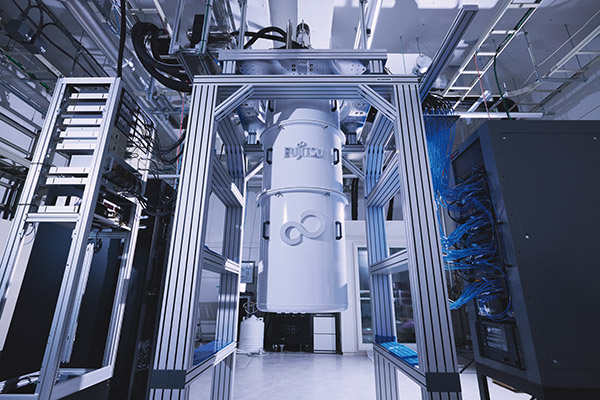 System F — a superconducting quantum computer designed to scale to hundreds of qubits.
The Depth of Your Tenacity Defines What You Achieve.
Masu has always stepped into new research topics without hesitation — even though his research career hasn't always been easy. Everyone feels discouraged when they fail, but he says, “being able to stay calm in those moments is one of the most important qualities a researcher can have.” For example, he notes that other researchers likely noticed the same phenomenon as Dr. Leo Esaki, who won the Nobel Prize in Physics for discovering the “tunnel effect.”
“Other researchers may have simply dismissed it as a failure or a mistake and not pursued it further. However, only Dr. Esaki took that data seriously and pursued the question of why. That pursuit led to the Nobel Prize. Chances come to everyone. But only the people who grab them — and don’t let go — become researchers who truly flourish. In the end, what’s really tested is the depth of that persistence — how far you’re willing to push. It is precisely this intensity of persistence that determines whether or not results are achieved.”
G-QuAT: Driving the Future of Real-World Quantum & AI Innovation
Founded in 2023, G-QuAT completed its headquarters building in March 2025. The facility now houses superconducting and neutral-atom quantum computers, along with the ABCI-Q system — an integrated platform combining quantum computers with GPU supercomputers. This is the Global Research and Development Center for Business by Quantum-AI technology (commonly known as “G-QuAT”), led by Director Masu, now operating as a fully realized research hub for the quantum and AI era.
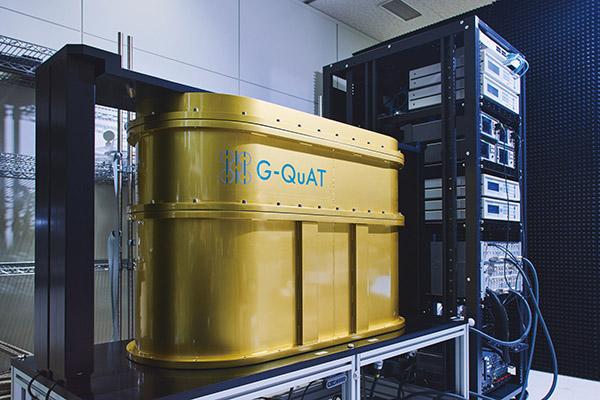 Qubed — a testbed for evaluating components and devices under near-operational conditions.
“G-QuAT is more than a research and development center. It’s a one-stop hub — a place that brings together everything needed to grow the quantum technology industry and turn it into real-world impact. Our goal isn’t just to generate research outcomes. We aim to become a collaborative hub — a place where developers of quantum and AI technologies, key component suppliers, and companies deploying these technologies in real-world settings all come together. Together, we’re building a business ecosystem — one that creates real value and keeps evolving.”
Masu leaves us with this closing thought:
“The future will undoubtedly require quantum technology and AI. While quantum and AI may appear incredibly powerful, they are still far from perfect, and errors are inherent. Amidst this, various efforts are underway to eliminate errors or find ways to utilize the technology despite them. In an unpredictable, rapidly changing world, building trustworthy systems is crucial. Here, we’ve created an environment where researchers and companies can take risks, learn from failure, and keep pushing forward — so they can help pioneer this new era.” G-QUAT is helping shape the future of quantum and AI with its forward-looking research approaches. Its doors remain wide open.
G-QUAT is helping shape the future of quantum and AI with its forward-looking research approaches. Its doors remain wide open.
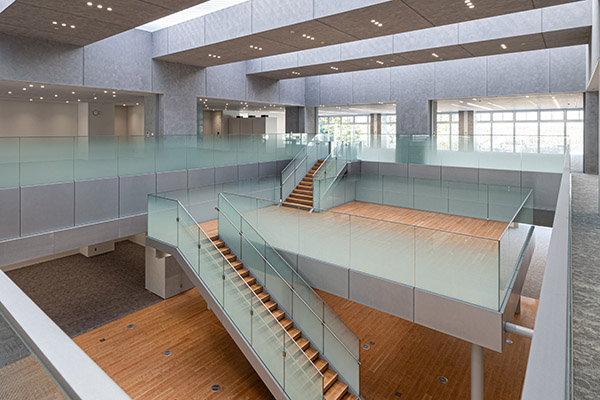 An incubation space that brings together diverse stakeholders working to create new business opportunities.
Want to dive deeper into G-QuAT? Check these out!
G-QuAT Introduction movie
G-QuAT Official Website