“Quantum Technology Will Become the Infrastructure That Connects People”
“Quantum Technology Will Become the Infrastructure That Connects People”
2025/12/03
“Quantum Technology Will Becomethe Infrastructure That Connects People”G-QuAT Director Masu Kazuya × Ambassador Audrey Tang Special Discussion
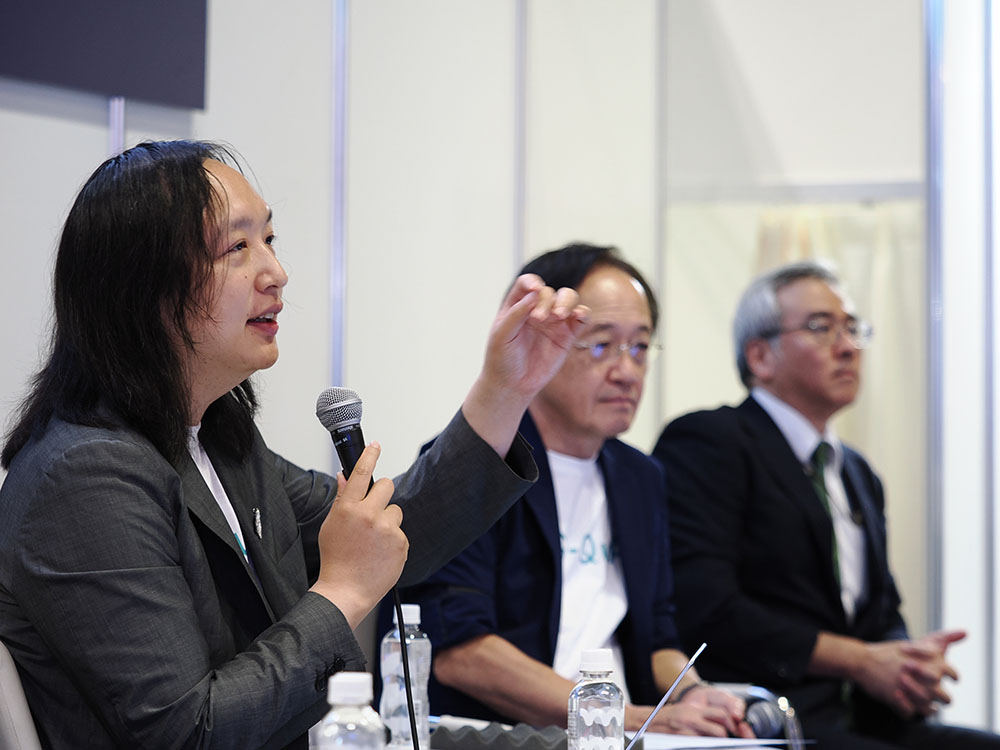 On October 16, 2025, at CEATEC 2025, Makuhari Messe, AIST hosted a conference titled “AIST G-QuAT Strategic Plans for Industrial Application of Quantum Technology.” During this conference, Dr. Masu Kazuya , Director of the Global Research and Development Center for Business by Quantum-AI technology (G-QuAT), and Ambassador (Amb.) Audrey Tang, Taiwan’s former Minister of Digital Affairs, engaged in a dialogue, exchanging views on multifaceted themes.
What Quantum Computing Brings to Democracy
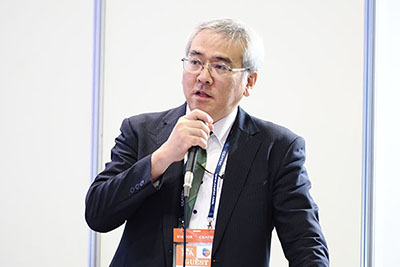 Deputy Director, G-QuAT HORIBE Masahiro
──Amb. Tang challenged the redesign of democracy using AI, achieving consensus-building through citizen participation. Her approach—implementing technology not as a tool for centralized control but as distributed intelligence within society, creating an environment where citizens can engage in rule-making—truly demonstrates the potential of modern democracy. So, my first question is: How do you think quantum computing can enhance the inclusive quality of life in democracy?
Amb. TangQuantum computing demonstrates its greatest power when developed as society’s “infrastructure.” In other words, it holds true value only when designed not to strengthen centralized power, but to enhance collective human intelligence.
I call this “Plurality.”
In this year, Japan has designated it the “First Year of Quantum Industrialization,” so it is crucial that the evolution of quantum technology promotes collaboration among people, rather than creating new disparities.
There are three areas of application for “Plurality.” The first is solving collective challenges. Fusing quantum technology and AI will lead to solutions for complex social issues. Specific examples include materials science for creating efficient batteries, green hydrogen, catalysts, and carbon sequestration. In the field of catalysts alone, replacing the Haber-Bosch process is said to reduce global CO2 emissions by about 2%. Such innovations will not only shape the future of the energy sector but also accelerate developments in various fields such as drug discovery and personalized medicine. Moreover, if we approach these collective challenges as something that can be solved through cooperation, democracy will function better.
The second application area is “democracy itself.” During the COVID-19 pandemic, Taiwan used an online tool called “Pol.is” to gather the voices of many citizens. This revealed common ground, even between those with seemingly opposing viewpoints. For example, there were overlooked connections between privacy protection and public health. By visualizing these shared concerns, they resolved a deadlock that might have taken years in just a few weeks. Quantum technology has potential to exponentially scale this process. It enables real-time analysis of millions of encrypted citizen voices while protecting privacy. And when people feel that “their opinions are impacting society,” democracy deepens. That’s what it means for people to be truly empowered.
The third application focuses on safeguarding the foundations of freedom of expression and association. Quantum communication has unique properties. For example, it allows communication parties to detect surveillance or prove that information has been completely erased. This is crucial for building infrastructure that journalists, activists, and citizens can safely rely on.
However, these tools become meaningless when monopolized by powerful players. Democracy truly thrives when technology distributes power outward. We believe that by opening quantum technology’s power to society and ensuring its impact is transparent, quantum technology can reliably contribute to society.
During my recent visit to Silicon Valley, I met people who believed in the imminent arrival of a “superintelligence” that would solve all of humanity’s problems. And quantum technology was thought to further accelerate that evolution. However, I feel Japan’s perspective differs slightly. While acceleration is important, what matters more is “steering the course.” In other words, it’s about creating a space where everyone can participate and benefit. After all, we humans are the very “superintelligence” we seek.
Dr. MasuUpon hearing your perspective, I was once again struck by the overwhelming power of quantum technology. At the same time, I believe you emphasized the importance of harnessing that power in a way that leaves no one behind. This viewpoint positions quantum technology not merely as a technological advancement but also as a form of social infrastructure that embraces diversity.
As a researcher myself, I have often focused on technical milestones, such as improving performance and solving unsolved problems. Today, however, I was reminded that the question of “for whom and for what purpose we utilize technology” is indispensable —perhaps even more so than the development itself. When discussing roadmaps for management or research, we often rely too heavily on the outcomes axis—what to achieve and by when. That alone is insufficient. Today, I feel that I have gained a more tangible understanding of the meaning of the word “democratization.”
How to Bridge the “Time Gap” Between Research and Industry
──The development of quantum computers is advancing rapidly worldwide, with investments expanding across both the government and private sectors. Within this landscape, however, a “time axis gap” has emerged between researchers engaged in fundamental research and industry and investors seeking short-term results. Amb. Tang, you have played a role in bridging the gap between technology and society from a policy perspective in Taiwan. How should this gap be overcome, and how should researchers, industry, and the government collaborate?
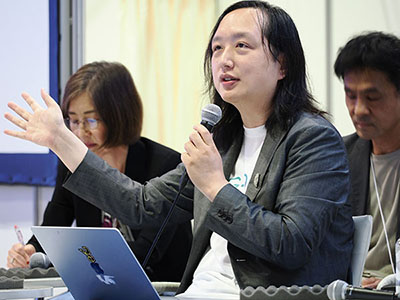 Ambassador Audrey Tang
Amb. TangThe “time horizon mismatch” is a critically important theme; however, it’s not unique to quantum technology. In fact, it’s a common challenge across all technologies.
I am currently conducting foundational research at Oxford University on a project called the “Six Pack of Care.” This initiative explores how machines can care for human society from philosophical and ethical perspectives. At the same time, as an ambassador, I engage with the immediate societal challenges posed by AI and new technologies. In other words, I navigate both long-term research and short-term social issues. I believe the key to finding solutions lies in building a “bridge” between the long and short terms rather than prioritizing one over the other.
One example of this “bridge” is the “Alignment Assemblies” project that we are conducting in Taiwan. It is a space where citizens gather to share their views on how AI should be managed so that more people can use it safely and effectively. Rather than using AI to control something, it is a democratic process in which citizens take the lead in considering how AI should be utilized. For instance, citizens and AI collaboratively deliberate on issues such as countermeasures against the harm of deepfake advertising and where to draw the “red lines” for AI usage. The infrastructure supporting this activity utilizes tools from private companies. At the same time, fundamental research on “What kind of AI will benefit future society?” is advancing from a long-term perspective. Thus, balancing short-term problem solving with long-term research and development is crucial.
I believe G-QuAT truly embodies this concept. For example, ABCI-Q’s integration of quantum and classical computers represents a hybrid approach. Likewise, its use of both Graphics Processing Units (GPUs) and Central Processing Units (CPUs) exemplifies this approach. These efforts represent the “bridge” we need. In the coming era, we believe it is critically important to continuously advance both “immediate, effective countermeasures” and “long-term fundamental research” without halting either.
Of course, solutions can sometimes create new challenges. The “Mask Map” introduced in Taiwan in 2020 is a prime example. This system automatically updated mask inventory information at sales locations on Google Maps every 30 seconds. However, opposition lawmakers questioned its “definition of equality.” The meaning of a 10 km distance differs greatly between cities and rural areas. What one subway stop in the city could mean waiting an hour for the next bus in the countryside. The same distance created inequality in time.
Fortunately, however, we were practicing Radical Transparency at the time. The opposition shared the same data, identified the issues, and proposed solutions. As a result, we implemented a mask pre-reservation system in just one week. By maintaining this level of transparency, we turned a failure into a learning opportunity that fostered the collective intelligence of our citizens.
After the pandemic, we established Taiwan’s Ministry of Digital Affairs within the Committee of Transportation in the parliament. This is a structure that is extremely rare globally. The reason is clear: we positioned digital initiatives as long-term infrastructure investments. By demonstrating the government’s commitment to sustained capital investment, industry can confidently provide technology and expertise. This stability enables academia to focus on fundamental research.
I feel the G-QuAT initiative shares precisely the same direction. While G-QuAT involves diverse partners, I believe presenting a solid plan makes it easier for more stakeholders to engage.。
When Taiwan established its Digital Ministry, we incorporated a motor design into its logo. This symbolizes our commitment to perpetual rotation and continuous forward progress. In this sense, I see many parallels between Taiwan’s approach and G-QuAT’s vision.
Dr. MasuWe experience every day how researchers engaged in fundamental research and those working in business environments have very different perceptions of time. Within this context, the term “bridge” used by Amb. Tang was particularly striking.
At G-QuAT, we consciously operate with this “bridge” in mind. For example, the G-QuAT headquarters building features an open space where researchers from academia and industry can freely gather and interact. We envision this space welcoming not only domestic participants but also individuals from overseas universities and companies. Our goal is for this space to connect to research and industry.
How to integrate new quantum technologies into society without causing public anxiety
――How do you think this new technology, quantum computers, should permeate society going forward so that people can embrace it without anxiety and it can contribute to the development of democracy?
Amb. TangAt its core, quantum technology is a “dual-use technology” in cyberspace, meaning it can be used for both defense and attack. If it is used for quantum attacks, encryption that currently seems like a “brick wall” could be torn apart like “paper.” We may even see an era where encrypted communication data is stored now, only to be decrypted by future quantum computers.
So, how do we build trust in such threatening technology? First, we must “give trust.” It’s crucial for researchers and policymakers to have an ongoing dialogue with citizens and openly share information about where technology is headed. I believe G-QuAT’s creation of spaces for dialogue with people is a prime example of this. Three years ago, I personally led an initiative in Taiwan focused on deepfakes. We deliberately released footage where an actor’s face was swapped with mine to make it appear as if I were speaking, conveying the message that “this technology will soon be accessible to anyone.” Back then, it still required significant GPU power and time, but now, with the advent of video-generating AI, that future has become reality.
We call this approach “pre-bunking.” It’s the idea of sharing information and preparing people before fraud or misinformation spreads, rather than debunking it afterward. By building shared knowledge between government and citizens, we can maintain societal trust.
Additionally, the concept of “red-teaming,” collaborating with white-hat hackers (ethical security researchers) to use quantum computers to find vulnerabilities before malicious attackers do, is also crucial. However, we must build not only technical safety but also social trust mechanisms.
To achieve this,
• fast response,
• Fair process,
• and fun participation is essential.
Because this isn’t about society “doing something,” but about “doing something together with society.” As often said in the open-source world, “Many eyes make bugs shallow.” Similarly, gathering many voices will make quantum computing safer.
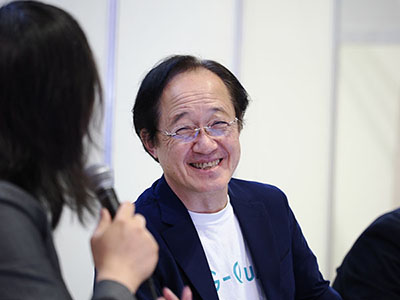 Director, G-QuAT MASU Kazuya
Dr. MasuThe evolution of quantum technology is truly rapid; it’s not something you can map out like a semiconductor roadmap. Even in the last two to three years, progress has been far faster than anticipated. Technologies that were initially thought to be 10 or 20 years away are now reaching a level where they could be realized within the next five years. That’s precisely why we feel a renewed responsibility to accurately communicate the evolution of this technology to society.
What is the role of research organizations committed to creating social value?
――Research institutions worldwide, including G-QuAT and those in Taiwan, are working to create social value. What social role is expected of such research organizations, and what mindset should they prioritize moving forward?
Amb. TangWhile working for the Taiwanese government, I saw myself as a bridge between the voice of society and the institutional framework. It felt like being at a Lagrange point between two celestial bodies. I existed as a “translator” connecting the two, belonging to neither orbit. From that perspective, G-QuAT is also exceptionally strong institutionally. It collaborates with industry, hosts multilateral dialogues with 13 countries, and organizes joint symposia. This fosters international consensus.
However, implementing this in society requires another shift in thinking. In AI, there’s the concept of “Human in the loop” design, where humans intentionally engage with AI and automated systems. Yet, the pace of AI and quantum technology evolution is so rapid that humans struggle to remain on the “controlling side.” It’s like a hamster endlessly running in a wheel. That’s why I want to say this: Instead of putting humans in the technology loop, let’s put technology in the human loop (technology-in-the-human-loop). This means placing technology within the bounds of human society’s moderation and ethics. While Silicon Valley has a culture of “Move fast and break things,” I believe the quantum computing field will increasingly demand an attitude of “Move carefully and repair things.” Compassionate innovation, not destruction, is what matters.
In quantum technology, the demand for skilled workers will likely triple compared to current levels. Therefore, we should help existing engineers transition smoothly into the quantum field, adopting an approach that expands their capabilities rather than replacing them. This is absolutely not about being replaced by robots.Furthermore, we should establish mechanisms that enable small and medium-sized enterprises to access ABCI-Q, allowing small teams to experiment with innovation without requiring massive investments. It is also crucial, of course, to ensure that the benefits extend beyond Tokyo to the entire region.
Dr. MasuAdvances in quantum technology are incredibly rapid, and we tend to focus too much on “how to run things efficiently.” However, I was reminded that implementation itself isn’t the goal; the essence lies in connecting it to the “happiness of people” that lies beyond.
Global Research and Development Center for Business by Quantum-AI technology
Director
Masu Kazuya